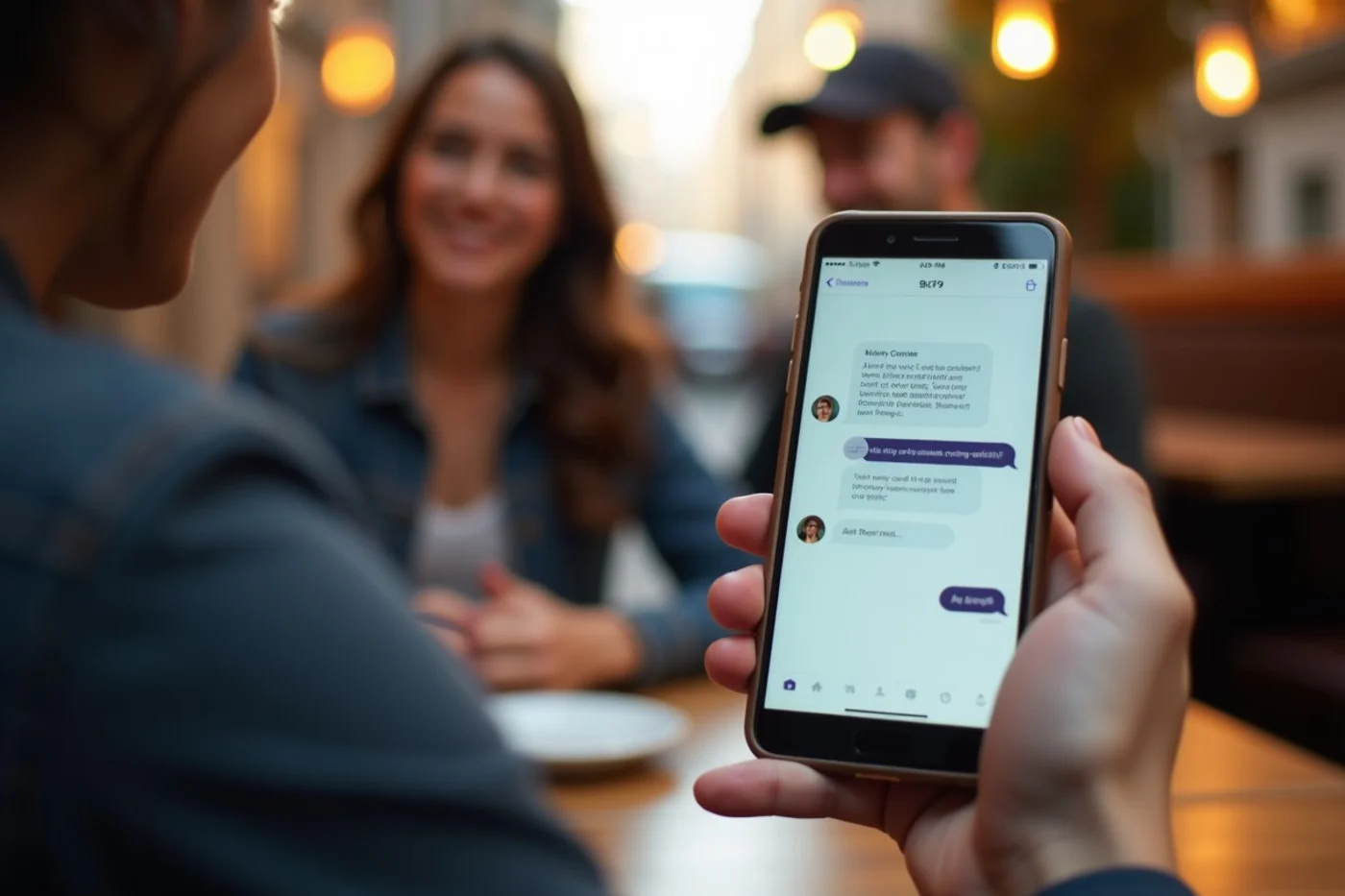
The common mistake is waiting for an app conversation to feel deeply familiar before proposing a date. Move a promising chat toward a first meeting once you have exchanged a few engaged messages, covered basic compatibility, and found genuine curiosity on both sides. A first date is where you learn whether the written version of someone holds up in everyday life; it is not a reward for completing weeks of texting.
Published by Dating Again
The Message-to-Date Transition

Enough rapport looks fairly modest: both people answer more than a prompt, ask follow-up questions, reply with some consistency, and have not uncovered an obvious mismatch in what they want. A detailed account of their last relationship, a running all-day chat, or a sense that you already know them well can wait.
For people dating again after a long relationship, the move can feel abrupt because app conversation lacks the gradual familiarity of a shared social circle. Meeting sooner replaces speculation with a real interaction. Some dates will be merely pleasant, brief, or not worth repeating, and accepting that can feel inconvenient. That is simply information, not a failed audition. Someone who responds warmly but never asks anything back has not created enough momentum to pursue hard.
Specific Invitations Reduce Endless Messaging
- Suggest coffee, a drink, a walk in a busy area, or another brief activity that leaves room for an easy exit after an hour.
- Offer a concrete option within the next several days. For example, someone whose childcare handoff ends at 6:30 might propose coffee at 7:15 on Wednesday, not a vague plan to meet sometime.
- Frame it as a chance to see whether the conversation feels as easy in person. That keeps the invitation proportionate to two people who have only met through an app.
- Set the location, day, time, and a simple way to recognize each other, such as what part of the venue to meet near. Then stop negotiating the date through a long thread of messages.
Enough Rapport Without a False Sense of Intimacy

A few lively messages about daily life, interests, and what each person is looking for
There is enough back-and-forth to justify meeting.
Suggest a date.
Weeks of late-night disclosures, constant contact, and imagined future plans before meeting
Writing has created emotional intensity without testing in-person chemistry or whether either person makes and keeps plans.
Bring the conversation back to a meeting or step away from it.
An engaged chat, but one person feels uneasy meeting without hearing the other person's voice
The remaining question is straightforward and easy to answer.
Arrange a brief phone or video call, then make a date plan or decline.
When They Avoid Making a Plan
A genuine delay usually comes with a reason and a date when the person expects to be free. Accept that answer, offer one alternative if the schedule needs it, and leave the ball with them. A polite decline deserves the same clean response: no persuasion, no demand for an explanation, no attempt to turn the answer into another round of app banter.
Repeated vagueness tells a different story. Someone who says they are busy but never names an opening, changes the subject after an invitation, or keeps restarting small talk is keeping the chat alive without moving it anywhere. After one clear invitation and one reasonable opening for them to suggest another time, stop pursuing the match. Endless messaging is not a pre-date stage; it is often the whole relationship they are available for.
A first date does not require certainty that you are ready for a new relationship. It requires enough interest to spend a short stretch of time together and enough steadiness to make a plan. When a conversation reaches that point, offer a clear meeting time. Their response will tell you more than another week of messages.